
Estimated reading time: 7 minutes
Why the Indiana Wine Scene Deserves a Closer Look
Indiana wine doesn’t have the instant name recognition of Napa or the Finger Lakes, and that’s exactly why it deserves a closer look. Its story has always been a little quieter, a little scrappier—and very easy to overlook if you’re only skimming the “top 10 wine regions” lists.
If you rewind the clock, Hoosier wine isn’t some brand‑new idea. Early settlers were already experimenting with vines in river valleys, trying to coax something drinkable out of challenging soils and weather. Prohibition, shifting tastes, and economics wiped a lot of that early momentum off the map, but the instinct to grow and ferment never really disappeared. The modern Indiana wine scene is, in many ways, a second act: smaller, more intentional, and powered by people who choose to do this in a place where nothing about it is easy.
That’s where the grit comes in. Today’s Hoosier winemakers are part farmer, part scientist, part gambler. They’re planting hybrids that can handle our humidity and cold snaps, watching the sky like hawks, and making calls in the vineyard you won’t find in any California playbook.
Lessons from Burgundy, Greece, Germany, and Arizona
On my own wine travels—to Burgundy, Greece, Germany, and Arizona—I’ve seen how each region leans hard into what makes it different: Burgundy doesn’t just whisper “terroir” with every tiny parcel; some days it feels like heaven on earth for wine lovers. Monastery‑planted slopes, sun-catching limestone terraces, cellar doors tucked into storybook villages, and a mosaic of climats so precise they earned UNESCO recognition—all of it conspires to make you slow down and pay attention to what’s in your glass.
Greece owns its seaside whites and ancient grapes, Germany turns cool‑climate tension into an art form, and Arizona proves desert wine is absolutely a thing. None of these places tries to be anywhere else; each doubles down on its own story—and that’s exactly the playbook Indiana can write in its own way.
That’s the question I see Indiana quietly asking now: “What’s our version of that?” Our answer won’t look or taste like Burgundy, Santorini, the Mosel, or the Sonoran Desert—and that’s exactly the point.
And Hoosier talent isn’t confined to our borders. Some Indiana‑born or Indiana‑trained winemakers have taken their skills to other regions, working in bigger, better‑known areas and quietly turning out serious wines there, too. I love that. It’s like Indiana is exporting a certain mindset: practical, unpretentious, detail‑oriented, and willing to hustle. When you taste a polished wine from another state and then realize the person behind it cut their teeth in the Midwest, it changes how you look at what’s happening back home.
Here, though, we’re still at that rare stage where the curtain hasn’t fully gone up. You can walk into a small tasting room on a Saturday, and the person pouring your flight might also be the one who decided when to pick, who shoveled out the tanks last harvest, and who stressed over whether to oak that Traminette. You’re not just sipping the finished product; you’re getting the director’s commentary along with it. That level of access doesn’t last forever once a region “pops.”
Of course, perception is still a big hill to climb. A lot of people hear “Indiana wine” and picture only sweet reds and slushie machines at a festival booth. Those wines exist, and if that’s your happy place, there’s zero shame in that. But sitting right next to them are dry whites with clean lines, reds with actual structure, hybrids that don’t taste like anything you’ve had from the West Coast, and the occasional sparkling or pét‑nat experiment that makes you blink and think, “Wait, this is from Indiana?”
In the end, the Indiana wine scene is really a story about people and place: farmers betting on tricky weather, families turning barns into wineries, friends pooling savings to plant that first block of vines, and Hoosiers who left the state to make wine elsewhere but still carry a little Indiana with them. When you discover a bottle that resonates with you—whether it’s crafted two hours from Fishers or by a Hoosier in another region—you’re not just enjoying wine. You’re experiencing a chapter in a story that continues to unfold.
That’s the story I want Explore Indiana Wine Scene to follow: the long arc from forgotten vineyards to modern tasting rooms, from “Indiana can’t make serious wine” to “Okay, I need another bottle of that.” Over the next few posts, I’ll be visiting real places, talking with the people behind the bottles, and sharing the hits, misses, and surprises along the way—no scripts, no scorecards, just one Hoosier palate trying to make sense of it all.
If you’ve got a favorite Indiana winery, a winemaker you think I should meet, or a bottle that changed your mind about what Hoosier wine can be, I’d love to hear about it. Drop it in the comments or send me a note—let’s build this map of Indiana wine together, one sip at a time.
Some terms to get us started
Wineries are not all the same
To keep things clear, I’m going to loosely bucket wineries into a couple of groups:
- Estate winery – These are the wineries that “play original music.” They grow the grapes themselves and are hands‑on in every chapter of the story that ends up in your glass—from vine to cellar to bottle. When you visit an estate winery, you’re tasting their place, their choices, and their craft all at once.
- Négociant – I hadn’t heard this term until a trip to Burgundy—a region about one‑third the size of Indiana but with dramatically more vines. Négociants buy grapes (or sometimes juice or finished wine) and then make and blend their own wines. They control almost every part of the story except the growing, though the good ones have strong, long‑term relationships with their growers. I’ll tend to focus more on estate wineries in this series, but I won’t overlook négociants entirely; just like Joseph Barbier from Gilly‑lès‑Cîteaux in Burgundy, a négociant’s wines can be very good. Where this gets tricky—especially for Indiana, in my opinion—is perception. If you’re buying Cabernet Sauvignon grapes, you compete with the rest of the world, so the bar instantly gets set much higher.
Explore Indiana Wine Scene: Key wine terms to know
You don’t need to memorize these, but I’ll use them often, so this is your quick primer:
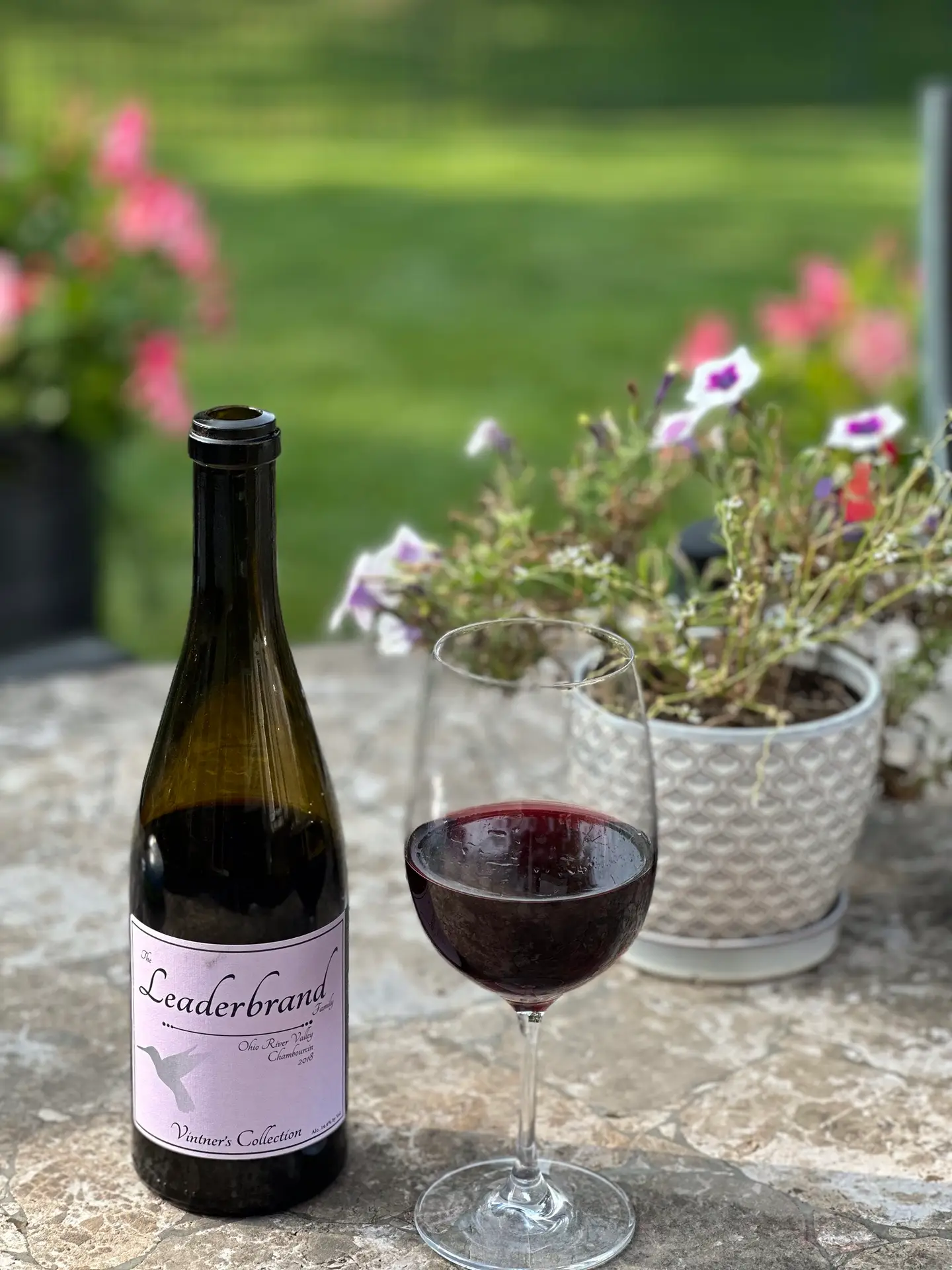
- Varietal – The grape used to make the wine, like Cabernet Sauvignon, Traminette, Chambourcin, or Riesling. If you see a wine labeled with a single grape name, that’s the varietal.
- Blend – A wine made from more than one grape. Many of Indiana’s most interesting wines are blends, especially when winemakers combine hybrids and classic grapes to balance flavor, body, and acidity.
- Hybrid grape – A grape created by crossing different vine species, often bred to handle cold winters, humidity, and disease pressure. Traminette and Chambourcin are good examples that thrive in Indiana.
- Traminette – Indiana’s signature wine grape, a hybrid related to Gewürztraminer, known for floral aromatics and spice; it’s grown and poured at many Indiana wineries.
- Vintage – The year the grapes were harvested. Weather shifts year to year, so the same wine from 2021 and 2022 can taste noticeably different.
- Dry / off‑dry / sweet – Roughly how much sweetness you’ll perceive. “Dry” means little to no sweetness, “off‑dry” has a light touch, and “sweet” is more obvious. Indiana wineries make all three.
- Acidity – The brightness or freshness you feel in a wine, especially along the sides of your tongue. Many Midwest whites and hybrids lean into higher acidity, which can be very food‑friendly.
- Tannin – The drying, slightly grippy sensation you get mostly from red wines, coming from grape skins, seeds, and sometimes oak. Some Indiana reds aim for softer tannins; others go a bit bolder.
- Body – How “big” the wine feels in your mouth—light, medium, or full‑bodied. Think skim milk vs whole milk as a texture comparison.
- Oak‑aged – Wine that spends time in oak barrels (or on oak) to add flavors like vanilla, spice, toast, or smoke and to round out the texture.
- Estate grown / estate bottled – Signals that the winery grew the grapes on their own property and made the wine themselves, which usually means maximum control over the whole process.
- Tasting flight – A set of small pours of different wines, often grouped by style (like “dry reds” or “sweet whites”), and one of the easiest ways to quickly figure out what you actually enjoy.
Leave a Reply